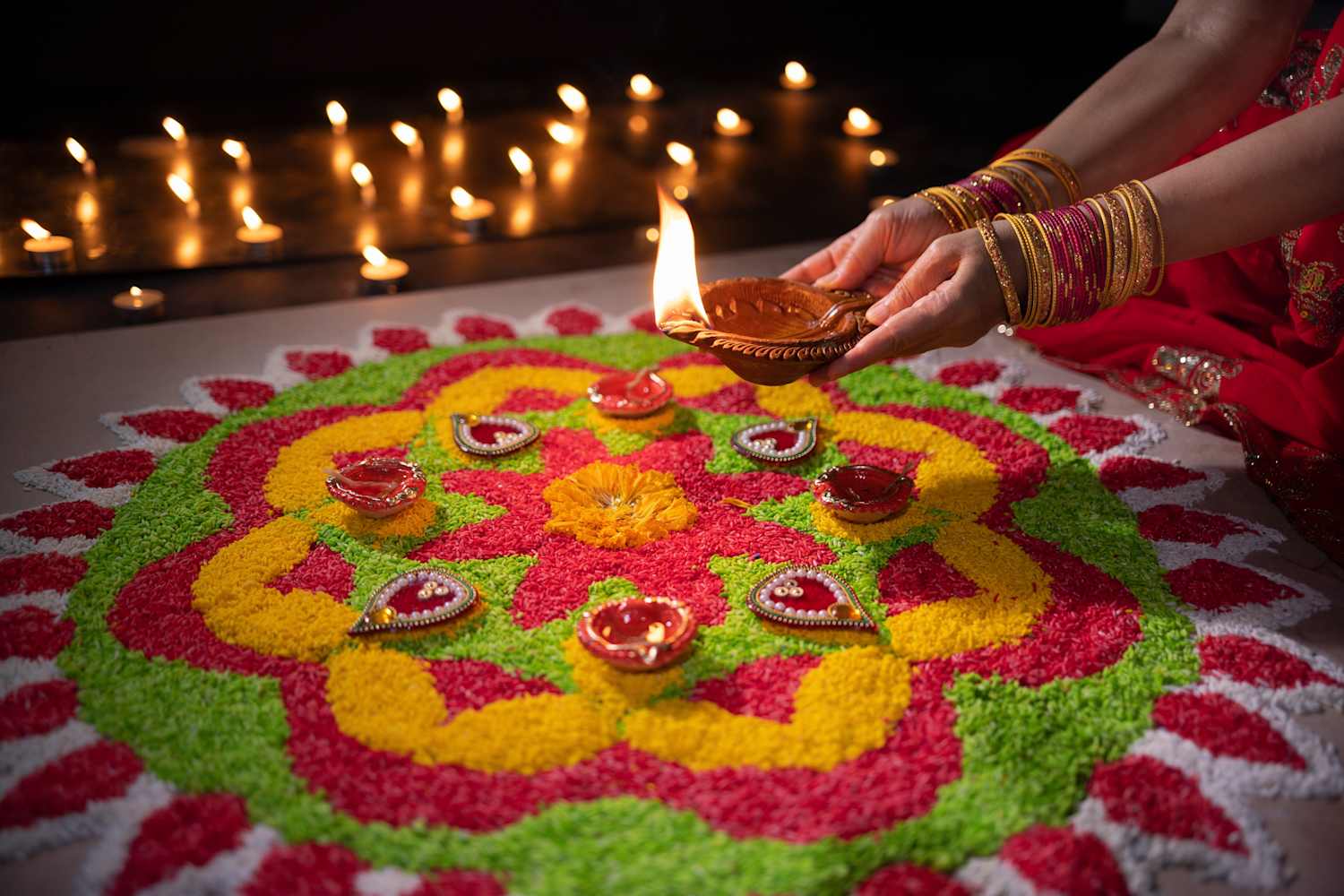
What the lights represent
For many celebrants, light expresses hope, knowledge, renewal, or the triumph of good over evil. Small oil lamps called diyas, candles, electric lights, and colourful rangoli patterns transform homes and public spaces. The visible decorations are part of a wider observance rather than the whole festival.
In many Hindu households, Lakshmi is honoured during Diwali, often in a prayer or puja at home or in a business. Other communities may focus on different stories, figures, and events. A respectful account makes room for those distinctions instead of presenting one interpretation as universal.
A time for family, food, and generosity
Families may clean and decorate their homes, visit relatives, exchange gifts or sweets, wear festive clothing, and share meals. Businesses in some communities mark the occasion with new account books or prayers for prosperity. Fireworks are part of some celebrations, but they are not essential to every observance and can create health, safety, and environmental concerns.
Food varies across regions and households. Sweets and savoury snacks are common gifts, but there is no single menu that defines Diwali for everyone. The most useful guide explains context and gives examples without turning one family’s practice into a rule for all.
Celebrate with understanding
The calendar date changes each year, and local public holidays may not perfectly describe the timing of every religious observance. When planning a visit or event, use a current local calendar and ask hosts about their own customs.
If you are invited to a Diwali gathering, arriving with a small sweet or greeting may be welcome, but let the host guide you around prayer spaces, footwear, and photography. Curiosity is appreciated when it comes with respect.