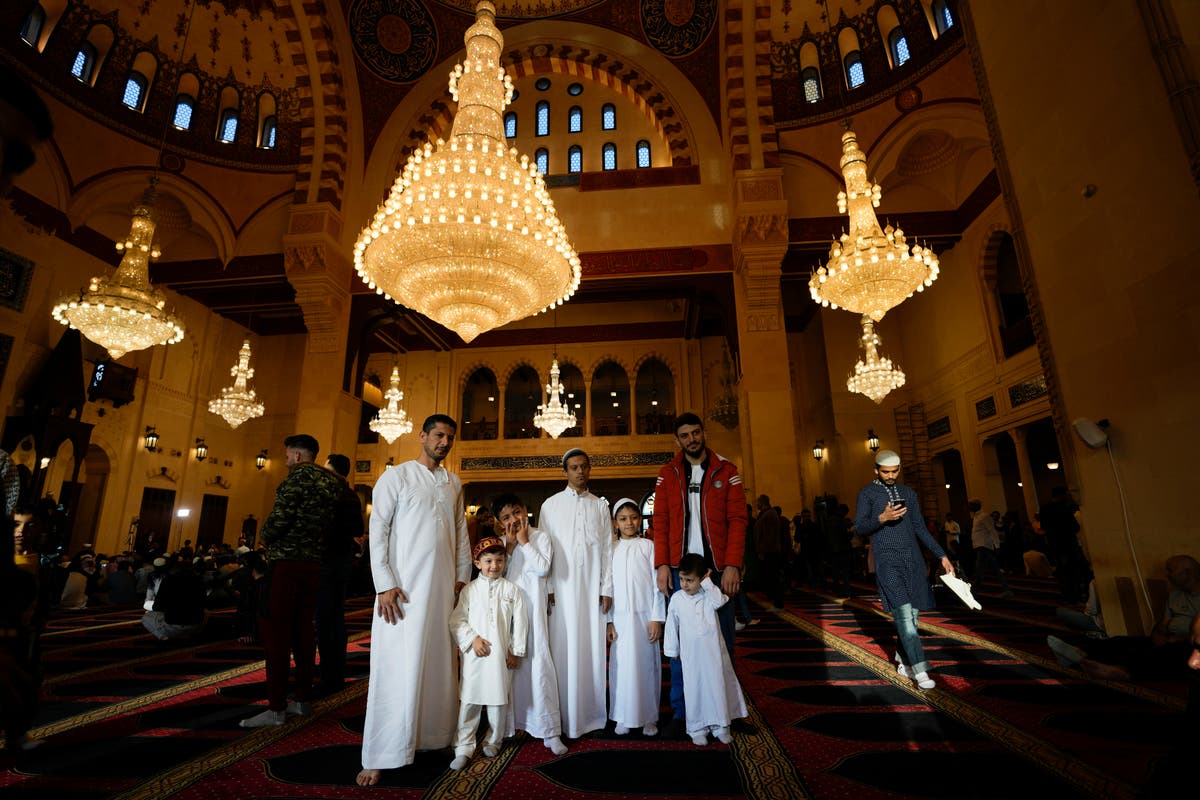
Prayer and giving
Many communities begin Eid with a special congregational prayer. Giving to people in need is an important part of the observance; zakat al-fitr is traditionally given before the Eid prayer so that those who need support can share in the celebration.
After prayer, people may visit relatives and neighbours, exchange greetings, wear festive clothing, and share meals or sweets. Customs differ by country, language, and family, so it is more accurate to describe examples than to prescribe one standard Eid routine.
A communal celebration
For many families, Eid is a time to reconnect after Ramadan, welcome guests, and give children gifts or money. Community meals and visits can extend across more than one day. Some people travel to be with relatives, while others mark the occasion with local friends and neighbours.
The greeting ‘Eid Mubarak’ is widely used to wish someone a blessed Eid. If you are visiting a Muslim household, ask about suitable times, food preferences, and prayer arrangements rather than assuming every home follows the same schedule.
Why dates must be checked locally
The Islamic calendar is lunar, and many communities confirm Eid through the sighting of the crescent moon or the decision of a recognized authority. As a result, announcements can differ between countries and sometimes between communities in the same country.
For publication and travel planning, do not present an estimated Gregorian date as final. Link to a current local announcement and visibly mark any early prediction as tentative.