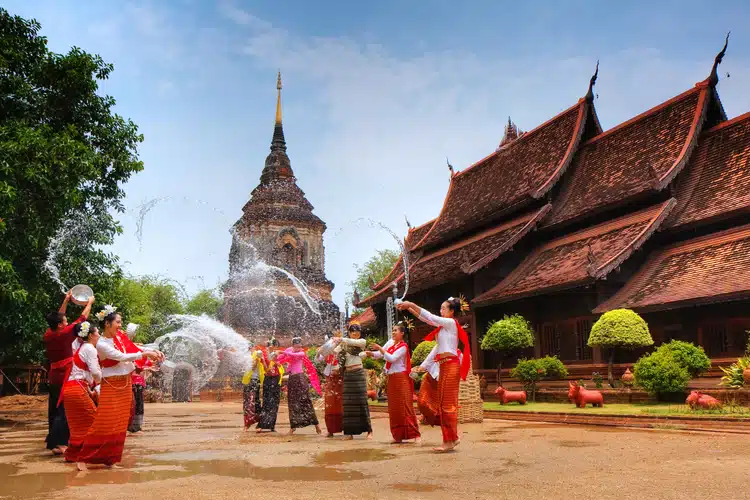
Water as a symbol of renewal
In traditional settings, gently pouring water over a Buddha image or the hands of elders can express respect and the wish for good fortune. These practices differ from the lively street celebrations that many visitors associate with Songkran, where people use water to cool one another and join public festivities.
The two sides of the festival exist together, but they call for different behaviour. Temple visits and family rituals are not the same activity as a street water fight, and the tone of each setting should be respected.
Family and community
Songkran is a major time for travel and family reunion in Thailand. People may return to their hometowns, visit elders, clean homes, and take part in merit-making at temples. Local customs and schedules vary, so a visitor should check the programme for the particular city or province.
Public water celebrations are not an invitation to target anyone without consent. Avoid throwing water at people who are working, riding motorbikes, or do not wish to participate; follow local safety notices and use public transport carefully during busy periods.
Visit with respect
At religious sites, dress modestly, remove shoes where indicated, and ask before photographing ceremonies. If an elder or host demonstrates a custom, observe first rather than copying a ritual without understanding its meaning.
The best way to appreciate Songkran is to see both its festive energy and its quieter themes of respect, gratitude, purification, and new beginnings.